1:1 Personalized Plastic Surgery & International Patient Concierge in Gangnam, Seoul


Hump Nose Reduction Surgery · Personalized Quote
Nasal Bridge & Tip Surgery
Nasal bridge and tip surgery is a form of rhinoplasty that focuses on refining the height, shape, and proportion of the nasal bridge while simultaneously correcting the contour, projection, and balance of the nasal tip.
Schedule a Consultation
Understanding Nasal Bridge & Tip Surgery
Nasal bridge and tip surgery is a form of rhinoplasty that focuses on refining the height, shape, and proportion of the nasal bridge while simultaneously correcting the contour, projection, and balance of the nasal tip. Rather than treating the nose as an isolated structure, this procedure evaluates the nose as a central facial feature that must harmonize with the eyes, lips, chin, and overall facial proportions.
At B:ON Plastic Surgery, nasal bridge and tip surgery is approached as a structural and analytical procedure, not a trend-driven cosmetic operation. The goal is to achieve balance and long-term stability through precise diagnosis, accurate calculation, and conservative surgical execution.
Modern nasal surgery no longer emphasizes height alone. Current surgical principles prioritize overall facial harmony, ensuring that the nasal bridge and tip align naturally with the patient’s facial framework rather than appearing overly prominent or artificial.
The Nose as a Structural and Aesthetic Center
The nose plays a critical role in facial balance. Small changes in bridge height or tip projection can significantly alter how the face is perceived from both frontal and profile views. For this reason, nasal bridge and tip surgery requires a comprehensive understanding of:
- Facial symmetry and proportions
- Nasal length, width, and angle
- Relationship between the nose, lips, and chin
- Skin thickness and cartilage strength
Excessive correction—such as raising the bridge too high or over-sharpening the tip—can disrupt facial balance, making the face appear flat or unnatural. Careful analysis is therefore essential before determining the surgical plan.
Surgical Philosophy at B:ON Plastic Surgery

At B:ON Plastic Surgery, nasal bridge and tip surgery is guided by three core principles: accuracy, safety, and natural integration.
Rather than applying a uniform nasal design, the clinic emphasizes:
- Precise facial analysis from multiple angles
- Individualized surgical planning based on anatomy
- Conservative correction that preserves natural identity
- Long-term stability over short-term visual impact
The procedure is designed to complement the patient’s facial structure rather than follow temporary aesthetic trends.
Surgeon Expertise and Clinical Approach
Nasal bridge and tip surgery is performed under the direct care of Hwang Gwi-hwan, who personally conducts consultations, surgical planning, and postoperative follow-up.
Dr. Hwang’s approach is based on accumulated clinical experience, detailed anatomical analysis, and continuous academic engagement. Surgical decisions are made after evaluating facial proportions, nasal structure, skin condition, and patient-specific characteristics.
Rather than focusing on dramatic reshaping, the surgical objective is to achieve balanced refinement that remains stable over time.
Key Components of Nasal Bridge Surgery
Bridge Height and Proportion
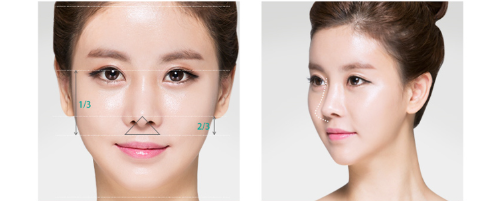
Nasal bridge surgery involves adjusting the height and contour of the nasal dorsum to achieve harmony with the face. A bridge that is too high or too low can disrupt facial balance, particularly in relation to the eyes and forehead.
Accurate measurement and proportion analysis are essential to determine the appropriate bridge height for each individual.
Bridge Angle and Line
In addition to height, the angle and smoothness of the nasal bridge line play an important role in facial aesthetics. The bridge should transition naturally from the forehead to the nasal tip without abrupt changes or irregularities.
This requires precise planning and controlled surgical technique.
Nasal Tip Surgery: Structural Balance and Definition
The nasal tip is one of the most complex areas of nasal surgery due to its delicate cartilage structure and its strong influence on facial expression.
Nasal tip surgery focuses on:
- Tip projection and length
- Tip rotation and angle
- Softness versus definition
- Structural support and stability
Rather than creating an overly sharp or narrow tip, the surgical goal is to form a natural and proportionate tip contour that complements the nasal bridge and surrounding facial features.
Materials Used in Nasal Bridge & Tip Surgery
The choice of surgical material depends on the patient’s anatomy, surgical goals, and whether the procedure is a primary or revision surgery.
Autologous Cartilage
Autologous cartilage is widely used due to its high biocompatibility and low rejection risk. It may be harvested from areas such as the nasal septum or ear cartilage, depending on availability and surgical requirements.
This material allows for natural shaping and long-term stability.
Silicone Implants
Silicone implants are commonly used materials with established safety profiles. They can be precisely shaped and adjusted during surgery. However, careful patient selection and surgical technique are essential.
Gore-Tex
Gore-Tex is a medically validated material known for its softness and tissue integration. It allows for natural contouring and is often selected when subtle refinement is required.
Autologous Fat
In selected cases, autologous fat may be used to refine contour or soften transitions. Fat is biocompatible and can help achieve smoother results when used appropriately.
Surgical Process Overview
Preoperative Consultation and Design
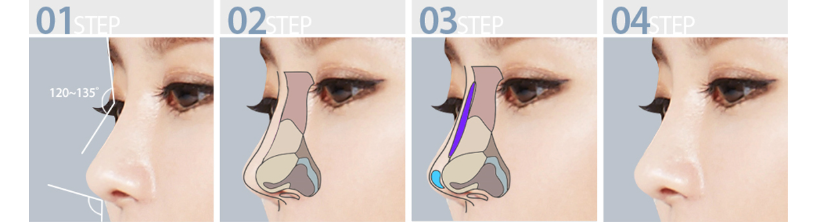
Before surgery, patients undergo a detailed consultation that includes:
- Facial proportion analysis
- Nasal structure and skin assessment
- Evaluation of bridge and tip balance
- Discussion of realistic outcomes
Surgical design is customized rather than standardized.
Anesthesia and Surgery Time
Nasal bridge and tip surgery is typically performed under sleep anesthesia or local anesthesia, depending on the case.
The average surgery time ranges from 30 minutes to 2 hours, depending on complexity.
Surgical Technique
The procedure involves careful incision placement, precise structural modification, and controlled fixation of materials. Each step is performed to minimize tissue trauma and support stable healing.
Recovery and Postoperative Care
Immediate Recovery
Patients usually return home on the same day of surgery. Mild swelling and discomfort are common in the early recovery period.
Recovery Timeline
- Initial swelling decreases gradually
- Daily activities may resume depending on the surgical method
- Splinting or taping duration varies by case
- Full stabilization occurs over time
Recovery duration may differ depending on surgical technique and individual healing response.
Expected Outcomes

When performed with accurate analysis and proper technique, nasal bridge and tip surgery can lead to:
- Improved facial balance
- Natural nasal contours from multiple angles
- Harmonized bridge and tip proportions
- Stable and long-lasting results
The goal is refinement, not exaggeration.
Indications for Nasal Bridge & Tip Surgery
This procedure may be considered in individuals who experience:
- Low or poorly defined nasal bridge
- Imbalanced nasal tip shape
- Incongruity between bridge and tip
- Dissatisfaction after previous nasal surgery
- Overall lack of facial dimensional balance
Each case is evaluated individually to determine suitability.
Safety, Hygiene, and Surgical Standards
Patient safety is a fundamental priority at B:ON Plastic Surgery. The clinic emphasizes:
- Strict hygiene and infection control
- Conservative tissue handling
- Anatomically respectful techniques
- Structured postoperative monitoring
These standards support safe surgical outcomes and predictable recovery.
Individualized Design and Long-Term Perspective
Nasal bridge and tip surgery is not a one-size-fits-all procedure. Differences in facial structure, skin thickness, and cartilage strength require personalized surgical planning.
By focusing on facial harmony rather than temporary trends, the procedure aims to deliver results that remain aesthetically appropriate over time.
Continuous Research and Clinical Refinement
Surgical expertise is supported by ongoing research, academic activity, and long-term outcome evaluation. Continuous refinement of techniques contributes to consistent surgical standards and patient satisfaction.
Conclusion
Nasal Bridge & Tip Surgery is a detailed and structurally sensitive procedure that requires precise analysis, individualized planning, and experienced surgical execution. When performed with anatomical accuracy and a conservative approach, it can enhance facial balance while preserving natural expression.
At B:ON Plastic Surgery, nasal bridge and tip surgery is approached as a medically grounded procedure focused on safety, proportion, and long-term harmony, providing outcomes tailored to each patient’s unique facial structure.
Other Services
Explore additional treatments offered by our specialists.

Forehead Lift Surgery
Forehead lift surgery is a facial surgical procedure intended to address age-related changes in the upper face, particularly the forehead, eyebrow region, and the glabellar area between the eyebrows.
Learn More

Breast Surgery
Breast Surgery encompasses a range of procedures designed to improve breast shape, size, symmetry, position, and overall harmony with the body.
Learn More

Jaw Reduction
Jaw reduction surgery is a facial bone contouring procedure designed to soften a wide or angular lower face by reshaping the mandibular angle and jawline.
Learn More