1:1 Personalized Plastic Surgery & International Patient Concierge in Gangnam, Seoul


Upper Eyelid Surgery · Personalized Quote
Double Eyelid Surgery
Double eyelid surgery is a commonly performed facial procedure designed to create a defined crease in the upper eyelid.
Schedule a Consultation
Introduction
Double eyelid surgery, also known as upper eyelid crease formation surgery, is a commonly performed facial procedure designed to create a defined crease in the upper eyelid. The goal of the procedure is not simply aesthetic enhancement, but structural refinement that aligns with the patient’s natural eye anatomy, facial proportions, and functional needs.
At B:ON Plastic Surgery, double eyelid surgery is approached as a precision-based facial procedure rather than a standardized cosmetic operation. The clinic applies individualized surgical planning, anatomical analysis, and long-term outcome considerations to ensure natural, stable results while prioritizing patient safety.
This article provides a medical overview of double eyelid surgery, including procedural types, indications, surgical processes, recovery considerations, and patient suitability, based solely on the clinical information provided.
Clinical Philosophy and Surgical Oversight
Double eyelid surgery at B:ON Plastic Surgery is performed under the direct supervision of Hwang Gwi-hwan, a surgeon with more than 25 years of clinical experience. The clinic’s approach emphasizes:
- One-to-one surgeon-led consultation
- Precise anatomical assessment of eyelid skin, fat, and muscle
- Conservative tissue handling to preserve natural eyelid movement
- Long-term structural stability rather than short-term visual change
All surgical decisions are made based on individual eye conditions rather than trend-based aesthetic standards.
Understanding Double Eyelid Anatomy
The upper eyelid crease forms when the levator muscle (which lifts the eyelid) connects to the overlying skin. In individuals without a natural crease, this connection may be absent or weak. Double eyelid surgery creates or reinforces this anatomical linkage.
Key anatomical factors evaluated before surgery include:
- Thickness and elasticity of eyelid skin
- Distribution of orbital fat
- Muscle strength and eyelid opening function
- Presence of asymmetry or eyelid drooping
- Relationship between eyelids, eyebrows, and forehead
A thorough understanding of these elements is essential to determining the most appropriate surgical method.
Types of Double Eyelid Surgery
Double eyelid surgery is not a single standardized procedure. At B:ON Plastic Surgery, three primary techniques are used depending on patient anatomy and goals.
Non-Incisional Method (Buried Suture Method)
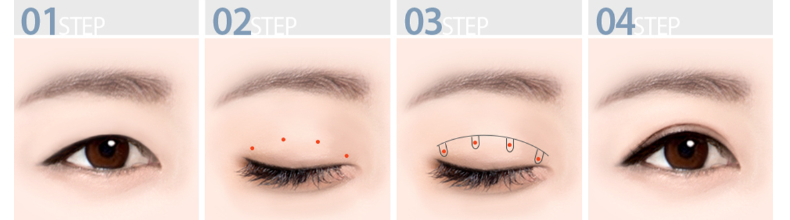
The non-incisional method creates a double eyelid crease using sutures without making a skin incision.
Procedure Characteristics
- Small needle entry points along the designed crease
- Sutures placed to connect skin and muscle
- No skin excision
Typical Indications
- Patients seeking faster recovery
- Minimal eyelid skin laxity
- Thin eyelid tissue
- Desire for a subtle, natural crease
Clinical Notes
This method generally involves shorter procedure time, minimal swelling, and faster return to daily activities. However, it may not be suitable for patients with thick eyelid skin or significant fat.
Partial Incision Method
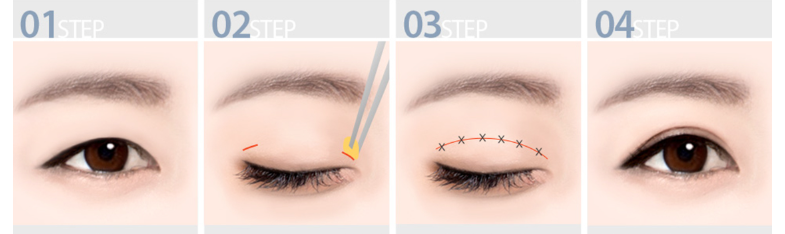
The partial incision method combines elements of non-incisional and incisional techniques.
Procedure Characteristics
- Small incision (approximately 2–3 mm)
- Limited removal of fat or muscle if needed
- Sutures used to stabilize the crease
Typical Indications
- Mild eyelid thickness
- Minor asymmetry
- Patients who require more durability than non-incisional methods
Clinical Notes
This method allows better structural correction while still minimizing swelling and recovery time compared to full incision techniques.
Full Incision Method

The full incision method involves a continuous incision along the designed eyelid crease.
Procedure Characteristics
- Skin incision along the full crease line
- Removal of excess skin, fat, or muscle when indicated
- Strong and stable crease fixation
Typical Indications
- Thick or drooping eyelid skin
- Significant fat accumulation
- Revision surgery cases
- Patients seeking a clearly defined, durable crease
Clinical Notes
Although recovery time is longer, this method offers the most stable long-term results, particularly in complex anatomical cases.
Surgical Process Overview
Regardless of the technique selected, double eyelid surgery follows a structured medical process.
Step 1: Preoperative Consultation
- Individual eye assessment
- Crease height and shape design
- Evaluation of eyelid symmetry and movement
- Discussion of realistic outcomes
Step 2: Surgical Design
- Crease line marked according to eye proportions
- Consideration of facial balance and natural expression
Step 3: Procedure
- Performed under local anesthesia or sedation depending on method
- Precise tissue handling to minimize trauma
Step 4: Immediate Postoperative Care
- Monitoring in a controlled clinical environment
- Instructions for swelling and wound management
Recovery and Healing Considerations

Recovery varies depending on the surgical technique used.
General Recovery Timeline
- Swelling and mild bruising: common in early stages
- Suture removal: typically 4–7 days (incisional methods)
- Return to daily activities: often within 1–2 weeks
- Final crease stabilization: several weeks to months
The clinic emphasizes structured postoperative care, including recovery management programs and follow-up evaluations to ensure safe healing and stable results.
Indications and Patient Suitability
Double eyelid surgery may be considered in the following cases:
- Desire to form a natural upper eyelid crease
- Eyelids that appear heavy or partially cover the eye
- Asymmetrical eyelid creases
- Crease disappearance due to aging
- Revision after previous eyelid surgery
Patient suitability is determined through direct consultation and is based on anatomical factors rather than age alone.
Safety, Ethics, and Surgical Responsibility
B:ON Plastic Surgery prioritizes patient safety through:
- Conservative surgical planning
- Minimization of unnecessary tissue removal
- Strict hygiene and infection-control protocols
- Transparent explanation of risks and limitations
The clinic does not promote exaggerated results or standardized crease designs. Instead, surgical decisions are guided by medical necessity and individual anatomy.
International Patient Considerations
The clinic provides structured support for international patients, including:
- Multilingual communication assistance (English, Russian, Mongolian, Vietnamese)
- Pre-surgical coordination
- Postoperative follow-up planning
This system allows international patients to receive consistent medical guidance throughout their treatment journey.
Long-Term Outcomes and Expectations

When performed with appropriate technique selection and anatomical precision, double eyelid surgery can provide:
- Stable crease formation
- Natural eyelid movement
- Balanced eye appearance
- Long-term structural consistency
Patients are advised that final outcomes depend on healing patterns and individual tissue characteristics.
Conclusion
Double eyelid surgery is a nuanced facial procedure that requires detailed anatomical understanding, individualized planning, and experienced surgical execution. At B:ON Plastic Surgery, the procedure is approached as a medically guided intervention rather than a cosmetic shortcut.
Under the direct care of Dr. Hwang Gwi-hwan, patients receive consultation-based surgical planning, technique selection tailored to eyelid anatomy, and structured postoperative care designed to support safe recovery and long-term stability.
For patients considering double eyelid surgery, informed decision-making, realistic expectations, and surgeon expertise remain the most important factors in achieving a balanced and natural outcome.
Other Services
Explore additional treatments offered by our specialists.

Forehead Lift Surgery
Forehead lift surgery is a facial surgical procedure intended to address age-related changes in the upper face, particularly the forehead, eyebrow region, and the glabellar area between the eyebrows.
Learn More

Breast Surgery
Breast Surgery encompasses a range of procedures designed to improve breast shape, size, symmetry, position, and overall harmony with the body.
Learn More

Jaw Reduction
Jaw reduction surgery is a facial bone contouring procedure designed to soften a wide or angular lower face by reshaping the mandibular angle and jawline.
Learn More